


Choosing the Perfect Gear for Your Vlogs
In today's digital age, it's easier than ever to create and publish your own content online. One popular form of content creation is vlogging, where individuals use video to record and share their experiences, opinions, and daily lives with their audience. Vlogging can be an incredibly rewarding hobby or a viable career option, but regardless of your goals, it's important to have the right equipment, starting with a good vlogging camera. In this article, we'll explore the different types of vlogging cameras available on the market, their features and specifications, and which one might be the best fit for your personal vlogging style.
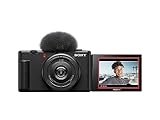 At the heart of every compelling vlog lies the vlogging camera—a trusty companion that captures life's moments and transforms them into engaging content. But with the myriad of vlogging cameras available, choosing the right one can be a daunting task. Fear not, for this guide will walk you through the world of vlogging cameras, helping you understand the features, types, and essential considerations that will enable you to make an informed decision. So, if you're ready to embark on your vlogging journey or upgrade your gear, let's dive into the exciting universe of vlogging cameras.
Provide tips for the perfect camera for your vlog
Video quality: You want a camera that can shoot in at least 1080p (Full HD), although 4K is becoming increasingly popular and future-proof. Higher resolution means sharper and more detailed videos, which can make your vlogs stand out from the crowd.
LCD flip screen: A camera with an LCD screen that can flip out and face you is very helpful for vlogging. It allows you to see yourself while recording, and adjust the framing and composition accordingly. Some cameras have screens that flip on top, which can interfere with the microphone placement, so look for ones that flip on the side or bottom.
Autofocus: A camera with good autofocus is essential for vlogging, especially if you move around a lot or have changing backgrounds. You don’t want to waste time manually focusing or end up with blurry footage. Look for a camera that has fast and accurate autofocus, and can track human and animal eyes and faces2.
Image stabilization: A camera with good image stabilization can smooth out the video when shooting handheld, which is often the case for vloggers. It can reduce the shakiness and jitteriness of the footage, and make it more pleasant to watch. Some cameras have optical image stabilization (OIS), which uses lens elements to counteract the camera movement, while others have electronic image stabilization (EIS), which uses software to crop and stabilize the video.
Size and weight: A camera that is compact and lightweight is ideal for vlogging on the go. It will be easier to hold, carry, and pack, and won’t tire your arm or strain your neck. A smaller camera will also be less conspicuous and attract less attention, which can be useful in some situations.
Monitor connectivity: If you vlog in a studio or at home, you might want to connect your camera to a monitor (a TV or computer screen) to see what you are recording in more detail. This can help you fine-tune your settings, lighting, and composition. To do this, your camera must have an HDMI or USB output that is compatible with your monitor.
Here's an overview of vlogging cameras
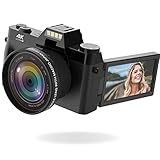 When choosing a vlogging camera, it's important to consider factors such as video resolution, low light performance, image stabilization, audio quality, connectivity options, and battery life. Finding the right balance of features, price, and usability is essential to ensure that your vlogs stand out and resonate with your audience.
Ads: Best Tech Us Offer


